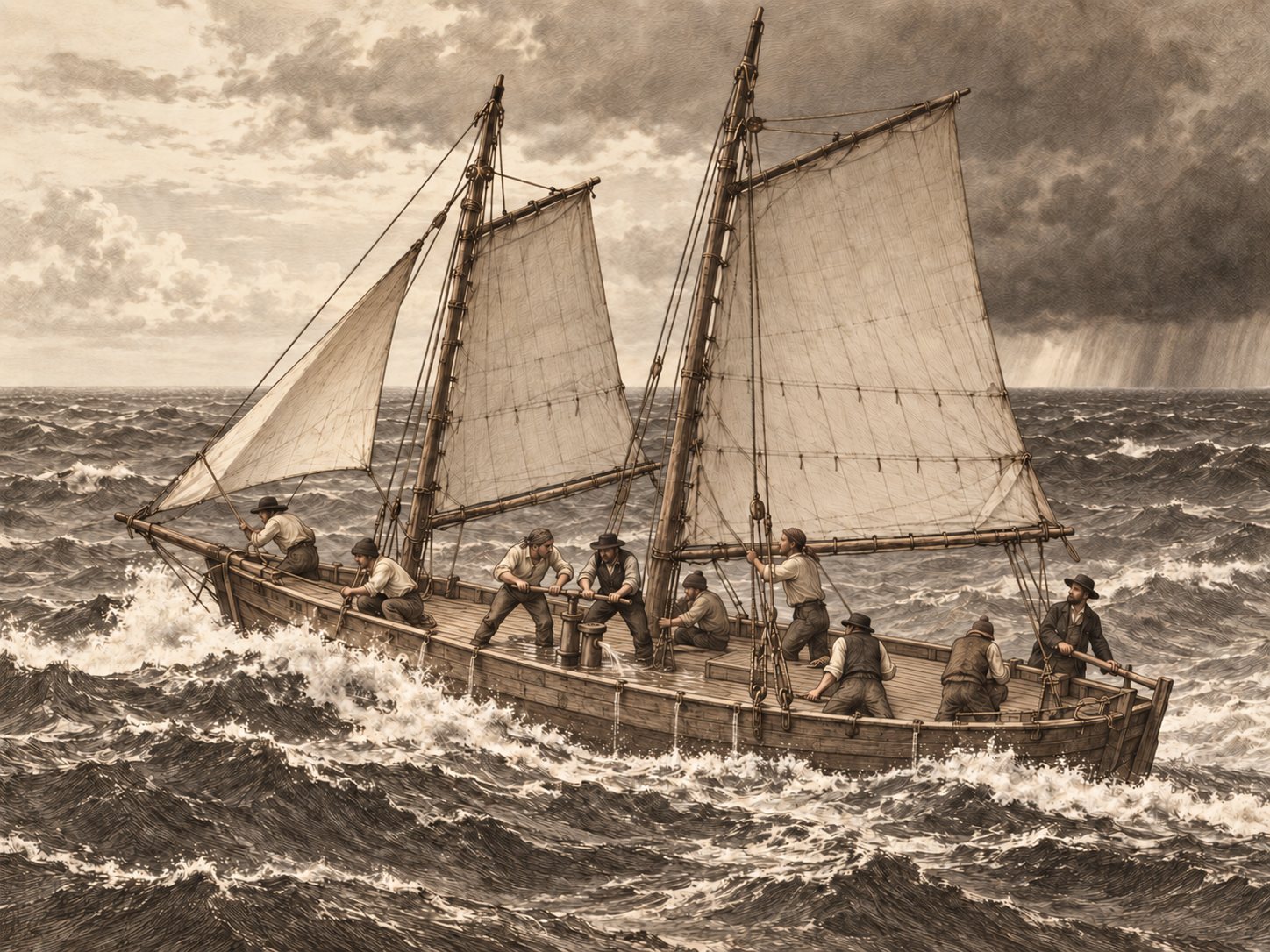
La Cumberland, goélette de 29 tonneaux (1801-1810)

Reconstitution d'après les sources connues ; aucune représentation d'époque de ce navire n'est conservée.

La Cumberland est une goélette de 29 tonneaux construite en 1801 par Thomas Moore au chantier royal de Port Jackson. Propriété du gouvernement colonial, elle transporte le grain de la Hawkesbury vers Sydney Cove avec un équipage de cinq hommes : un maître, un second et trois matelots.

La Royal Navy l'achète au début de 1803 et la confie au lieutenant par intérim Charles Robbins, pour seconder l'arpenteur Charles Grimes dans le levé de King Island et de Port Phillip (janvier-février 1803).

Après le naufrage du Porpoise, le gouverneur King la propose à Flinders pour rentrer au plus vite en Angleterre par le détroit de Torres. Flinders hésite : la goélette est « un peu moins grande qu'un bateau de passage de Gravesend », et ce n'est pas sa petite taille qui l'inquiète le plus, mais « la vivacité de ses mouvements et le manque de commodités », qui l'empêcheront de mettre au net ses cartes et son journal pendant la traversée. Il accepte pourtant, pour repasser par le détroit de Torres et y compléter ses observations.

Il quitte Wreck Reef le 11 octobre 1803, met dix jours pour atteindre le détroit de Torres, trois pour le franchir et dix-sept pour gagner Coupang, à Timor. La goélette fait eau dès qu'elle gîte, et ses pompes sont si mauvaises qu'il faut souvent y passer le quart de la journée. Flinders doit relâcher à l'île de France (Maurice), où il arrive le 17 décembre 1803.

La France et l'Angleterre étant de nouveau en guerre, le gouverneur Decaen saisit la Cumberland, les cartes et les journaux, et retient Flinders prisonnier pendant six ans et demi. La goélette reste à Maurice après la libération de Flinders, le 13 juin 1810 ; reprise par les Britanniques lors de la conquête de l'île en 1810, elle est vendue la même année.

NomsHMCS Cumberland (navire colonial), puis HMS Cumberland
ConstructeurThomas Moore, chantier royal (King's Dockyard), Sydney
Lancement1801
Acquisition1803, par la Royal Navy
CaptureDécembre 1803, à l'île de France (Maurice)
SortReprise par les Britanniques en 1810 et vendue
Caractéristiques
TypeGoélette
Tonnage29 tonneaux (jauge BOM)
GréementGoélette à deux mâts
PropulsionVoiles
Équipage5 hommes au service de la colonie (1802)
Avec Flinders11 octobre - 17 décembre 1803, de Wreck Reef à l'île de France

Sources : Wikipédia ; Matthew Flinders, A Voyage to Terra Australis (1814).

The Cumberland, 29-ton schooner (1801-1810)

Reconstruction based on known sources; no contemporary depiction of this vessel survives.

The Cumberland was a 29-ton schooner built in 1801 by Thomas Moore at the King's Dockyard, Port Jackson. Owned by the colonial government, she carried grain from the Hawkesbury to Sydney Cove with a crew of five: a master, a master's mate and three able seamen.

The Royal Navy bought her early in 1803 and placed her under Acting Lieutenant Charles Robbins to assist the surveyor Charles Grimes in charting King Island and Port Phillip (January-February 1803).

After the wreck of the Porpoise, Governor King offered her to Flinders so that he could return to England as quickly as possible through Torres Strait. Flinders hesitated: the schooner was “something less than a Gravesend passage boat”, and it was not her small size that troubled him most, but “the quickness of her motion and the want of convenience”, which would prevent him preparing his charts and journal on the passage. He accepted nevertheless, in order to pass Torres Strait again and complete his observations there.

He left Wreck Reef on 11 October 1803, took ten days to reach Torres Strait, three to pass through it and seventeen to reach Coepang Bay in Timor. The schooner leaked whenever she heeled, and her pumps were so bad that a quarter of the day was often spent at them. Flinders had to put in at the Isle de France (Mauritius), which he reached on 17 December 1803.

France and Britain being at war again, Governor Decaen seized the Cumberland, the charts and the journals, and held Flinders prisoner for six and a half years. The schooner remained at Mauritius after Flinders's release on 13 June 1810; retaken by the British when they captured the island in 1810, she was sold that same year.

NamesHMCS Cumberland (colonial vessel), then HMS Cumberland
BuilderThomas Moore, King's Dockyard, Sydney
Launched1801
Acquired1803, by the Royal Navy
CapturedDecember 1803, at the Isle de France (Mauritius)
FateRetaken by the British in 1810 and sold
Characteristics
TypeSchooner
Tons burthen29 (bm)
Sail planTwo-masted schooner
PropulsionSail
Complement5 in colonial service (1802)
With Flinders11 October - 17 December 1803, from Wreck Reef to the Isle de France

Sources: Wikipedia; Matthew Flinders, A Voyage to Terra Australis (1814).