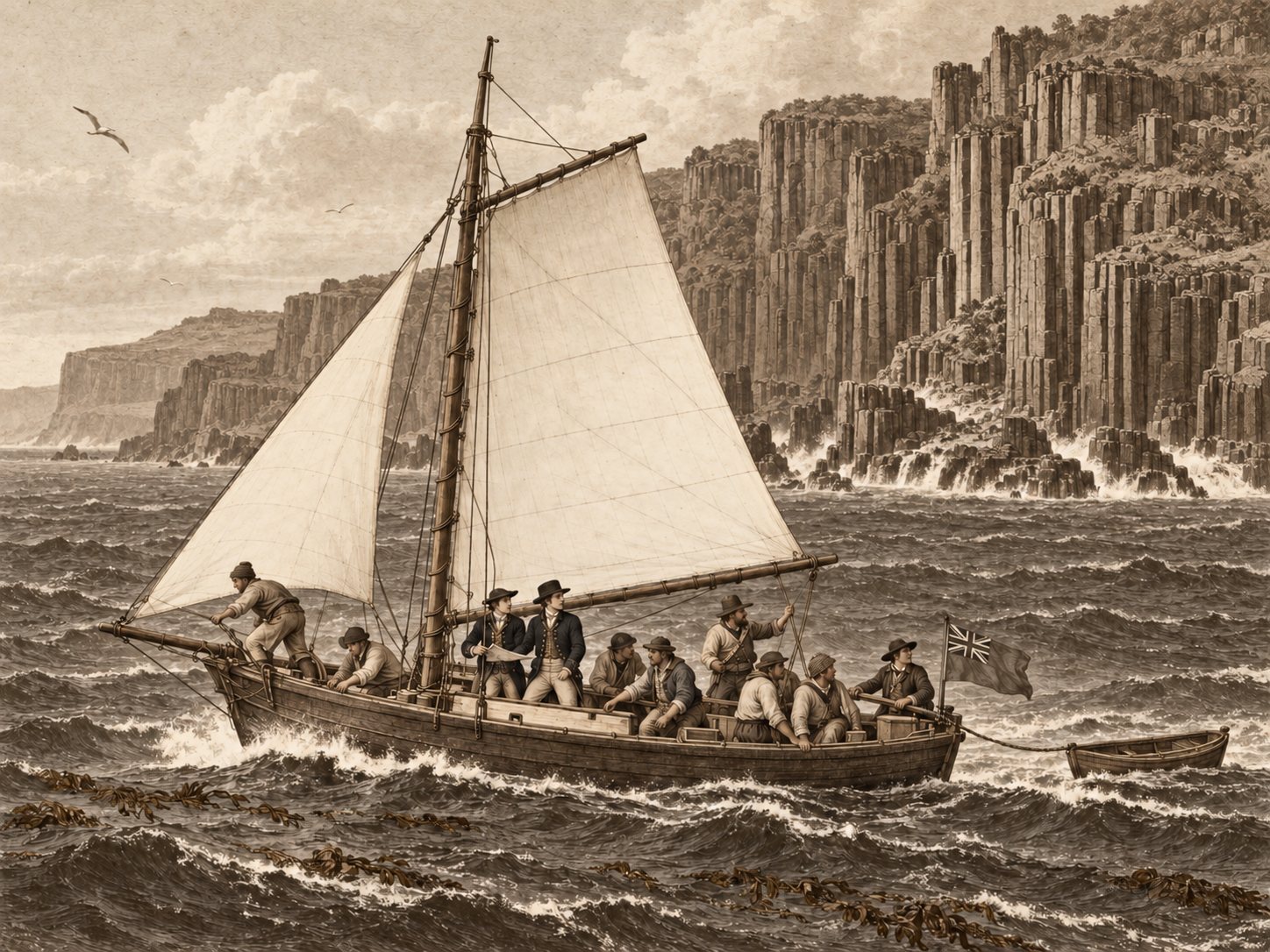
Le Norfolk, sloop colonial (1798-1800)

Reconstitution d'après les sources connues ; aucune représentation d'époque de ce navire n'est conservée.

Le Norfolk est un sloop colonial de 25 tonneaux construit en 1798 à l'île Norfolk. David Collins rapporte que le capitaine Townson, commandant de l'île, fit construire « un petit bateau ponté, gréé en sloop » pour assurer des liaisons plus fréquentes avec Port Jackson ; Cumpston le décrit comme « une chaloupe pontée construite à l'île Norfolk ».

On a douté qu'il ait été construit en pin de Norfolk, bois réputé médiocre dans l'eau, et supposé qu'il réemployait des bordages de bateaux de l'île, peut-être du HMS Sirius. Collins affirme pourtant que « le navire qui a l'honneur d'avoir le premier fait le tour de la Terre de Van Diemen fut construit à l'île Norfolk, avec le sapin de ce pays, qui s'est révélé tout à fait convenable ».

Le gouverneur Hunter le confie à Matthew Flinders, avec le maître Peter Hibbs, ancien du Sirius. D'octobre 1798 à janvier 1799, Flinders, George Bass et huit matelots volontaires font le tour de la Terre de Van Diemen et établissent l'existence du détroit de Bass. En juillet et août 1799, Flinders remonte la côte jusqu'à Moreton Bay et Hervey Bay, avec Bungaree à son bord. Près de soixante-quinze noms, en Tasmanie et sur la côte du Queensland, datent des campagnes du Norfolk.

Le sloop sert ensuite à transporter les récoltes de la Hawkesbury vers Port Jackson. En 1800, des forçats s'en emparent à l'embouchure de la Hawkesbury pour gagner les Moluques, mais l'échouent sur une pointe de la rive nord de l'embouchure de la Hunter, depuis appelée Pirate Point, aujourd'hui dans le quartier de Stockton, à Newcastle.

En 1998-1999, Bern Cuthbertson, de Sandy Bay (Tasmanie), refait tous les voyages du Norfolk sur une réplique en pin huon et en pin céleri de Tasmanie, aujourd'hui exposée au Bass & Flinders Centre de George Town, sur la Tamar. En 2000, l'office des noms de lieux du Queensland a nommé Norfolk Point, dans le port de plaisance de Manly, sur Moreton Bay, en souvenir de Flinders et de l'escale de la réplique.

NomNorfolk
ConstructionÎle Norfolk, sur ordre du capitaine Townson
Lancement1798
SortVolé par des forçats et échoué en 1800 à Pirate Point (Stockton, Newcastle)
Caractéristiques
TypeSloop colonial, chaloupe pontée
Tonnage25 tonneaux (jauge BOM)
BoisPin de l'île Norfolk selon Collins (discuté)
GréementSloop (un mât)
PropulsionVoiles
ÉquipageFlinders, Bass et huit matelots volontaires (1798-1799)
Réplique1998, Bern Cuthbertson ; Bass & Flinders Centre, George Town

Sources : Wikipédia ; Matthew Flinders, A Voyage to Terra Australis (1814).

The Norfolk, colonial sloop (1798-1800)

Reconstruction based on known sources; no contemporary depiction of this vessel survives.

The Norfolk was a 25-ton colonial sloop built on Norfolk Island in 1798. David Collins records that Captain Townson, the island's commandant, had “a small decked boat, sloop rigged” built to keep up a more frequent intercourse with Port Jackson; Cumpston describes her as “a decked longboat built at Norfolk Island”.

It has been doubted that she was built of Norfolk Island pine, a timber said to be useless in water, and suggested that she reused timbers from existing boats on the island, perhaps from HMS Sirius. Collins nevertheless states that “the vessel that has the credit of having first circumnavigated Van Diemen's land was built at Norfolk Island, on the fir of that country, which was found to answer extremely well”.

Governor Hunter placed her under Matthew Flinders, with the sailing master Peter Hibbs, formerly of the Sirius. From October 1798 to January 1799 Flinders, George Bass and eight volunteer seamen sailed round Van Diemen's Land and established the existence of Bass Strait. In July and August 1799 Flinders ran north to Moreton Bay and Hervey Bay, with Bungaree aboard. Some seventy-five names, in Tasmania and on the Queensland coast, date from the Norfolk's campaigns.

The sloop was then used to carry produce from the Hawkesbury to Port Jackson. In 1800 convicts seized her at the mouth of the Hawkesbury, intending to sail to the Moluccas, but ran her aground on the northern side of the mouth of the Hunter, at a spot since called Pirate Point, now in the suburb of Stockton, Newcastle.

In 1998-1999 Bern Cuthbertson of Sandy Bay, Tasmania, re-enacted all the Norfolk's voyages in a replica built of Tasmanian Huon and celery-top pine, now displayed at the Bass & Flinders Centre in George Town on the Tamar. In 2000 the Queensland Place Names Board named Norfolk Point, in the Manly boat harbour on Moreton Bay, in honour of Flinders and of the replica's visit.

NameNorfolk
BuiltNorfolk Island, on Captain Townson's orders
Launched1798
FateSeized by convicts and wrecked in 1800 at Pirate Point (Stockton, Newcastle)
Characteristics
TypeColonial sloop, decked longboat
Tons burthen25 (bm)
TimberNorfolk Island pine according to Collins (disputed)
Sail planSloop (single mast)
PropulsionSail
CrewFlinders, Bass and eight volunteer seamen (1798-1799)
Replica1998, Bern Cuthbertson; Bass & Flinders Centre, George Town

Sources: Wikipedia; Matthew Flinders, A Voyage to Terra Australis (1814).